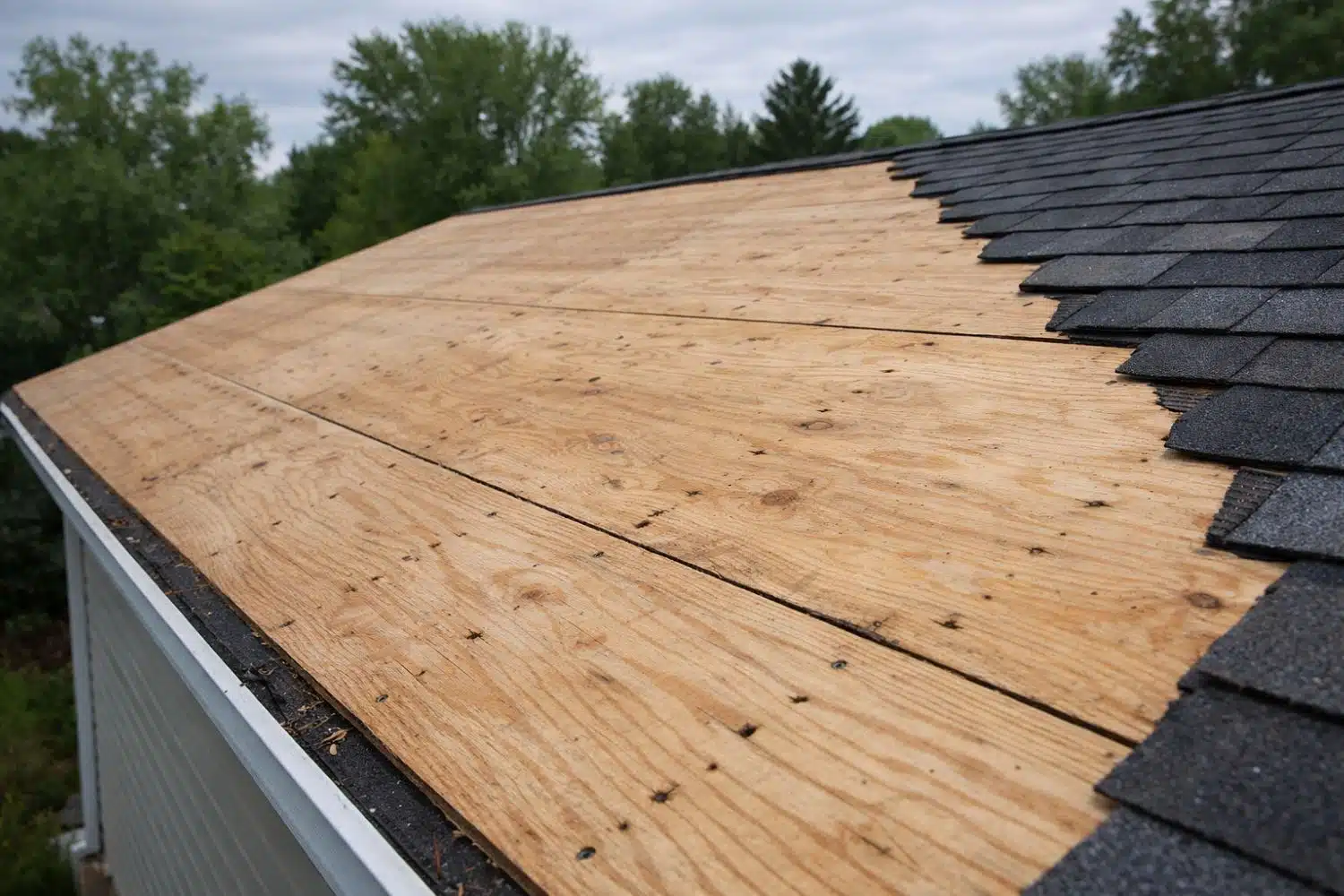
Roof sheathing thickness plays a critical role in how well your roof performs — yet it’s one of the most overlooked parts of the roofing system. Sheathing affects shingle fastening strength, roof safety, ventilation performance, and long-term durability.
Many homeowners don’t think about decking at all until a roof tear-off reveals sagging boards, rot, or nail-holding problems that must be addressed before new shingles can be installed.
This guide explains standard roof sheathing thicknesses, material types, and the warning signs that indicate replacement is necessary. For a full overview of how decking fits into the roofing system, visit our roofing services hub.
What Is Roof Sheathing?
Roof sheathing (also called roof decking) is the structural layer installed over the roof rafters or trusses. Shingles, underlayment, flashing, and vents are all installed on top of this surface.
Sheathing must be:
- Strong enough to support roof loads
- Thick enough to hold fasteners securely
- Flat and dry to allow shingles to seal properly
If decking fails, even the best shingles won’t perform as intended. Improper fastening caused by weak decking is one of the leading causes of shingle failure — this guide on proper roofing nail placement explains why.
Common Roof Sheathing Materials: OSB vs Plywood
Oriented Strand Board (OSB)
- Made from compressed wood strands and resin
- Widely used in modern construction
- Lower cost than plywood
- Performs well when kept dry
- More vulnerable to swelling if exposed to moisture
Plywood
- Made from layered wood veneers
- Stronger nail-holding capability
- Better resistance to moisture over time
- Higher cost, often used in upgrades or repairs
Both materials are code-approved when installed at proper thickness — but condition matters more than material alone. Moisture intrusion from leaks is often what determines failure; see expert roof leak repair in Michigan for related issues.
Minimum Roof Sheathing Thickness Guidelines
While local codes vary, common standards include:
- 3/8″ – Minimum allowed in some older homes (often insufficient today)
- 7/16″ OSB – Current minimum standard for many residential roofs
- 1/2″ plywood or OSB – Preferred for strength and durability
- 5/8″ – Often used for high-end roofs, heavy shingles, or wider rafter spacing
If your home was built decades ago, thinner decking may no longer meet modern requirements — especially when replacing a roof. This often comes up during roof replacement inspections.
Why Thickness Matters
Proper thickness ensures:
- Nails penetrate and hold correctly
- Shingles resist wind uplift
- Roof loads are supported safely
- Surface remains flat for proper shingle sealing
Thin or deteriorated decking can lead to nail pop-through, wavy rooflines, and premature shingle failure. If your roof appears uneven, this article explains when a wavy roof is normal vs problematic.
Signs Roof Decking Is Failing
Decking problems are often hidden until shingles are removed, but warning signs include:
- Soft or spongy areas when walking on the roof
- Sagging or uneven rooflines
- Persistent or recurring leaks
- Wavy appearance after new shingles are installed
- Mold or moisture in the attic
- Shingles that won’t lay flat or seal properly
If these issues are present, installing new shingles without addressing decking can create bigger problems — especially during storms. Learn more about storm-related roof damage.
What Roofers Check During a Tear-Off
A full tear-off allows contractors to inspect the roof structure properly. During this process, professionals check for:
- Rotted or delaminated sheathing
- Swelling from moisture exposure
- Nail-holding strength
- Spacing between rafters or trusses
- Proper fastening patterns
- Code compliance for thickness and material
This is why many contractors recommend tear-off replacement over re-roofing. For clarity, review re-roofing vs tear-off replacement explained.
When Roof Sheathing Must Be Replaced
Decking replacement is usually required when:
- Boards are rotted, soft, or water-damaged
- Thickness does not meet current standards
- Nails no longer hold securely
- Ventilation issues caused long-term moisture exposure
- Storm damage compromised the structure
Ventilation plays a major role here — inadequate airflow accelerates decking deterioration. Learn more about roof ventilation issues and impacts.
Skipping decking replacement when it’s needed can void warranties, fail inspections, and shorten roof lifespan significantly.
How Michigan Weather Impacts Roof Decking
Michigan’s climate is especially hard on roof sheathing due to:
- Freeze-thaw expansion and contraction
- Ice dams forcing water beneath shingles
- Heavy snow loads
- High humidity trapped in poorly ventilated attics
Decking that looks fine from below may already be weakened by years of moisture exposure. If winter damage is a concern, this guide on preventing winter roof damage adds context.
Why Decking Evaluation Should Happen Before You Commit
Many homeowners are surprised by decking costs — but ignoring decking issues can lead to:
- Shingle blow-offs
- Repeated leaks
- Early roof failure
- Insurance or warranty disputes
A professional inspection helps you understand what’s required before work begins. Here is what you can expect during a roof inspection.
Concerned About Your Roof Decking?
If your roof feels soft, looks wavy, or has recurring leaks, decking may be part of the problem.
AllPoint Construction offers professional roof inspections to evaluate:
- Decking thickness and condition
- Nail-holding strength
- Moisture and ventilation issues
- Overall roof system integrity
So you can make an informed decision before committing.
📞 Call (734) 407-7110
📍 Serving Downriver & Metro Detroit — view our service areas (including Allen Park and nearby communities)
📅 Schedule your Free Roof Inspection via our Contact Us page