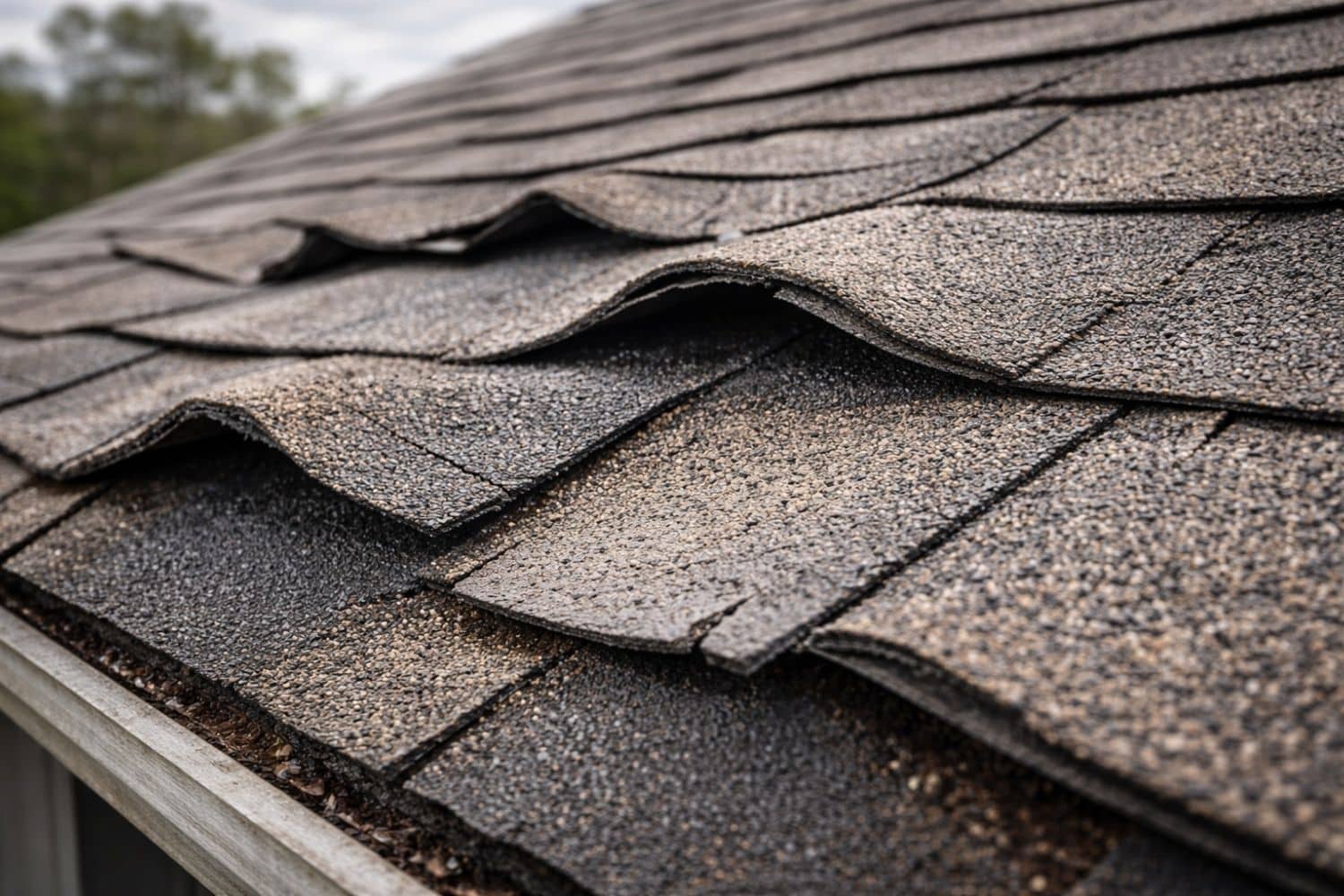
Curling or cracking shingles are more than cosmetic issues — they’re often early warning signs of aging materials, ventilation problems, or storm damage. Many Michigan homeowners notice these changes gradually, unsure whether they’re normal wear or signs of a serious problem.
Understanding why shingles curl or crack is important. But just as critical is knowing when repairs are no longer enough — because waiting too long can lead to leaks, interior damage, and significantly higher repair costs. If you’re evaluating next steps, our roofing services page provides a helpful overview.
What Does It Mean When Shingles Start Curling?

Curling shingles usually indicate that the roof system is aging or failing.
There are two common types of curling:
- Cupping – edges of shingles turn upward
- Clawing – edges remain flat while the center rises
Both reduce the shingle’s ability to shed water and protect your home, increasing the likelihood of leaks that may eventually require roof repair or replacement.
Common Causes of Curling or Cracking Shingles
1. Aging Roofing Materials
Asphalt shingles naturally lose oils over time. In Michigan’s freeze-thaw climate, this aging process happens faster than many homeowners expect. Learn more about realistic timelines in how long a roof is good for.
2. Poor Roof Ventilation
Improper ventilation traps heat and moisture in the attic, causing shingles to dry out, curl, and crack prematurely. This is one of the most common underlying issues contractors uncover.
For more detail, see why proper roofing ventilation is so important or review our roof ventilation services.
3. Storm & Weather Damage
High winds, hail, and temperature swings can weaken shingles long before leaks appear. Even subtle storm damage can accelerate cracking and curling.
If severe weather may be involved, it’s worth reviewing storm damage roof repairs and how hail damage affects shingles.
4. Improper Installation
Nails placed incorrectly, poor alignment, skipped underlayment, or shortcuts during installation can all shorten shingle lifespan. These issues often surface years later as curling or cracking.
This is why many homeowners research things to ask when getting roofing quotes before hiring a contractor.
5. Moisture Problems
Trapped moisture beneath shingles can lead to cracking, curling, mold growth, and hidden deck damage — issues that often aren’t visible until shingles are removed.
Are Curling or Cracking Shingles Always an Emergency?
Not always — but they should never be ignored.
Minor curling on a newer roof may be repairable. However, widespread curling or cracking often signals systemic issues rather than isolated damage. In these cases, repeated repairs can become more expensive than addressing the root cause.
❗ When Repairs Are No Longer Enough
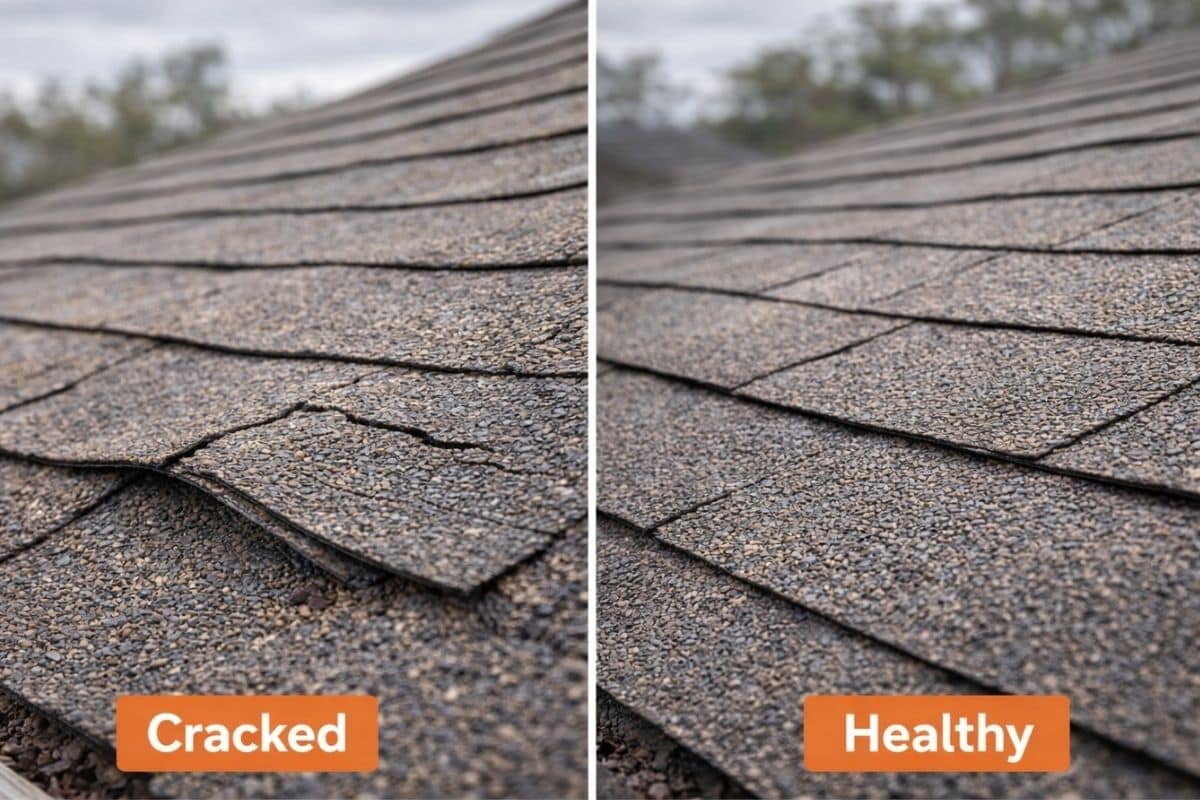
Spot repairs may no longer make sense if:
- Curling or cracking appears across multiple roof sections
- Shingles are brittle or breaking apart
- Granules are accumulating in gutters
- Leaks have started inside the home
- The roof is nearing the end of its expected lifespan
At this stage, repairs can turn into a recurring expense with diminishing returns. Many homeowners begin exploring roof replacement once these signs appear.
Signs You May Need Full Roof Replacement
You may want to consider replacement if:
- Your roof is 15–20+ years old
- Shingles are curling, cracking, or buckling throughout
- Repairs are becoming more frequent
- Ventilation issues are widespread
- Storm damage is involved
- You want long-term warranty protection
If you’re unsure, this breakdown on repairs vs replacements can help clarify the decision.
Why Professional Inspection Matters
From the ground, curling shingles may look minor. On the roof, contractors often find:
- Soft or rotted decking
- Ventilation failures
- Moisture intrusion
- Improper flashing
- Previous repair shortcuts
Identifying these early can prevent structural damage and costly interior repairs. Here’s what happens during roof inspections if you’re curious about the process.
Not Sure What Your Roof Is Telling You?
If you’ve noticed curling, cracking, or buckling shingles, don’t guess.
AllPoint Construction provides free professional roof inspections for Michigan homeowners — with honest recommendations and no pressure.
We’ll:
- Identify the cause of the damage
- Explain repair vs replacement options clearly
- Help you plan before problems escalate
📞 Call (734) 407-7110
📍 Serving Downriver & Metro Detroit — view our service areas (including Allen Park and nearby communities)
📅 Schedule your free roof inspection via our Contact Us page